

The Dual Horizon: Why Our Future is Both Martian and Terrestrial
There’s a hum in the air, a palpable electricity that reminds me why I dedicated my life to understanding the future of technology. It's not just the roar of a rocket, but the quiet, persistent pulse of progress that’s truly exhilarating. Right now, as we stand on the cusp of truly unprecedented achievements, it feels like humanity is finally stretching its legs, looking both outward to the stars and inward to our precious home. We're not just witnessing a series of discrete events; we're living through a grand, unfolding narrative where our destiny is inextricably linked to both the red dust of Mars and the rising tides of Earth.
Think about the sheer audacity of it all. We’re talking about a future where a spacex rocket isn't just a launch vehicle, but a literal bridge to other worlds. I’m telling you, the energy around the upcoming Starship launches from Florida is absolutely electric. For years, we’ve watched SpaceX push the boundaries from Texas, but the move to Cape Canaveral, to Pad 39A—the very launchpad that sent humans to the Moon—that’s a symbolic and practical leap that changes everything. Kiko Dontchev, SpaceX’s VP of Launch, recently teased that Starship to launch from Kennedy Space Center as soon as next year, per SpaceX, after the Version 3 Starship takes its maiden flight from Texas. This isn't just about a bigger rocket; it's about unlocking a new era of space exploration, one where the scale of our ambition finally matches the technology.
Reaching for the Red Planet: A New Era of Audacity
Imagine, for a moment, the spectacle. A fully stacked Starship, a towering monolith over 400 feet tall, dwarfing everything around it, ready to unleash 33 engines with a thunderous roar that will literally shake the ground beneath your feet. The sheer power, the raw engineering brilliance required to lift such a behemoth, is staggering. And what's its mission? Not just to orbit, but to serve as NASA's lunar lander for the Artemis missions, aiming to put boots back on the Moon for the first time in over 50 years. But here's the kicker, the truly mind-bending part: Starship needs orbital refueling to make that moon mission possible, a feat of cosmic ballet that's never been done on this scale. It's a challenge, sure, but the kind of challenge that fuels the engineers, that makes them push harder. When I first heard the details of the Gigabay construction at Kennedy Space Center—a facility designed just for stacking these colossal Super Heavy boosters, standing 380 feet tall itself—I honestly just sat back in my chair, speechless. The scale of this infrastructure, the sheer commitment to this vision, is breathtaking. It’s like watching the early explorers build their ships, not just for a trip across the ocean, but for charting entirely new continents, entire new worlds! The environmental statements for these launches, addressing everything from noise levels to potential structural damage and even impacts on fishing, are crucial, of course. We have a responsibility to manage this incredible power carefully. But the dream? The dream is bigger than ever.
Our Vigilant Eye on the Blue Marble: Data, Responsibility, and the Unseen Truth
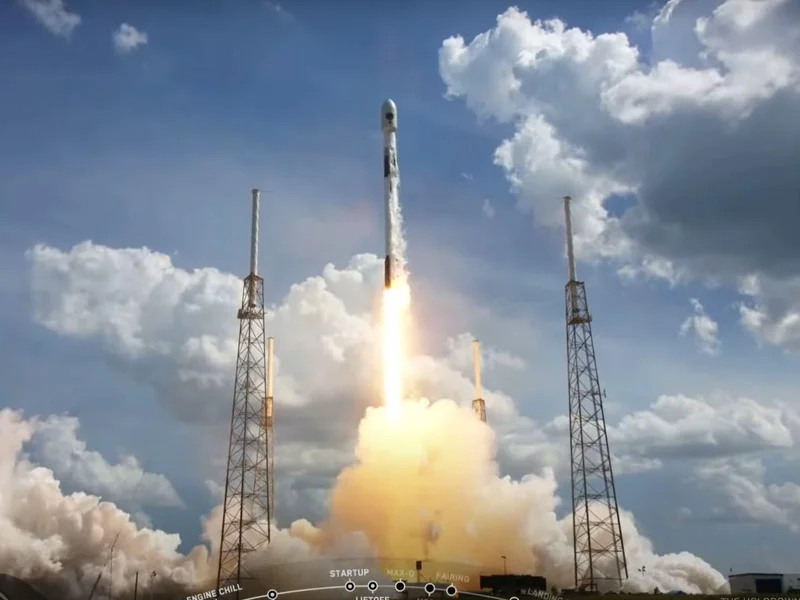
While our gaze is fixed on Mars, another crucial part of our dual horizon is firmly rooted here on Earth. Just recently, SpaceX launches joint NASA-European sea level monitor – Spaceflight Now, a rocket launch today that didn't get the same headlines as a Mars-bound Starship, but is every bit as vital. This isn’t a mission about exploration in the traditional sense; it’s about preservation, about understanding the delicate balance of our home. These satellites are basically our planet’s eyes, constantly monitoring sea levels with incredible precision, down to about one inch, a figure that's hard to wrap your head around when you consider the vastness of the oceans.
The data from Sentinel-6B, building on decades of continuous observation, paints a clear picture: sea levels are rising. Now, you might have seen some headlines, or heard talk about how NASA’s recent briefings for Sentinel-6B didn’t explicitly use terms like "climate change" or "global warming." And yes, that's a point worth noting. But here’s my take: regardless of the language used, the data itself is undeniable. These satellites are giving us an uninterrupted stream of information that speaks for itself. It's telling us about coastal erosion, saltwater encroachment into our freshwater supplies, and the long-term shifts in our planet's systems. It’s a testament to our growing scientific maturity that we’re not just sending people to the moon, but also deploying incredibly sophisticated instruments to safeguard the only home we’ve ever known. It reminds us that our quest for the cosmos isn’t an escape from Earth, but a deeper understanding of our place within it. We’re learning to measure the subtle shifts in our planet, almost like a doctor listening to a heartbeat, detecting even the slightest tremor—not unlike how we track seismic activity that might cause an earthquake. This dual commitment, to both reach for the stars and protect our blue marble, is, in my optimistic opinion, the true hallmark of a species ready for a sustainable, multi-planetary future.
The Only Way Forward: A Unified Vision
So, when you ask yourself, "was there a rocket launch today?" or "did spacex launch today?", remember it's not just about a single event. It's about a continuous, accelerating wave of human ingenuity. We’re witnessing the simultaneous expansion of our reach and the deepening of our responsibility. The spacex launch schedule isn't just a list of dates; it's a testament to a future where we’re not only dreaming of Mars but actively taking steps to get there, while also building the tools to become better stewards of Earth. This isn't just technology; it's a profound statement about who we are and who we aspire to be. The dual horizon isn't a choice between two paths; it's the inevitable, exhilarating journey of a species finally coming into its own.